3d Live Button: A Practical Guide to Interactive Design Elements
In the rapidly evolving landscape of digital design, the demand for dynamic visual elements has never been higher. Users expect interfaces that feel alive, responsive, and engaging. Among the various assets available to designers, the 3d Live Button stands out as a versatile component that bridges the gap between static aesthetics and interactive functionality. This article explores what makes this specific design element distinct, how it compares to other rendering styles, and when it serves as the optimal choice for your project.
Understanding the 3d Live Button Concept
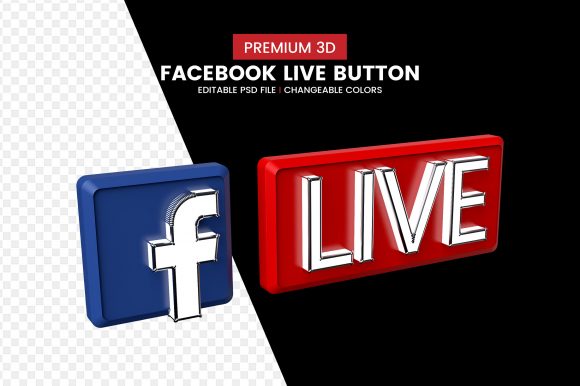
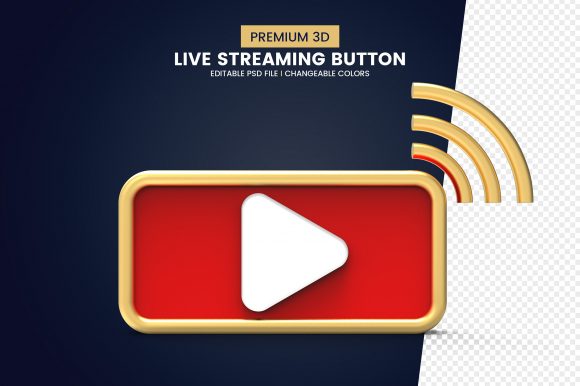
A 3d Live Button is not merely a graphical representation of a button; it is a design asset engineered to simulate depth, lighting, and motion within a two-dimensional interface. Unlike flat design elements that rely on color and typography alone, a 3d render icon badge utilizes shading, gradients, and perspective to create a tangible presence. The term "Live" often implies a readiness for animation or a state of high interactivity, suggesting that the element is designed to respond dynamically to user input.
The core appeal of this asset lies in its isolated design with a transparent background. This feature allows designers to place the button seamlessly into any composition without worrying about clipping paths or awkward white boxes. Whether you are building a mobile application, a gaming overlay, or a promotional website, the ability to drop this element into a scene and have it integrate naturally is a significant advantage. The design is crafted to be easily modified, giving users control over size and color to match their brand identity.
Comparing 3d Live Button with Alternative Styles
When evaluating design resources, professionals often weigh the 3d Live Button against several other categories. Understanding these distinctions is crucial for making an informed decision about which tool fits your specific workflow.
Flat Design vs. Three-Dimensional Rendering
Flat design has dominated the web for over a decade due to its clean lines, fast loading times, and scalability. However, flat buttons can sometimes struggle to convey importance or urgency in cluttered environments. The 3d Live Button offers a solution by adding visual weight. It draws the eye more effectively than a flat rectangle because the human brain is wired to notice depth. While a flat button might blend into a minimalist dashboard, a rendered 3d element pops out, signaling that it is clickable and important.
Conversely, fully animated video backgrounds or complex WebGL implementations offer high interactivity but come with heavy performance costs. A 3d Live Button provides a middle ground. It offers the aesthetic richness of 3D graphics without requiring the browser to render complex geometry in real-time. Instead, it uses high-resolution imagery (JPG) or layered files (PSD) to achieve the look, ensuring smooth performance across devices.
Static Icons vs. Editable Assets
Many stock image sites offer pre-made 3D icons that are locked in their final form. Once downloaded, these images are static; changing the color requires using photo editing software to recolor pixels, which is time-consuming and often results in loss of quality. The 3d Live Button differs significantly because it includes an editable PSD file.
This distinction is vital for professional workflows. With an editable layer structure, a designer can change the hue of the button to match a new brand guideline in seconds without degrading the image quality. They can adjust the lighting effects, modify the shadow intensity, or resize the badge while maintaining the crisp edges provided by the vector-like layers. This flexibility transforms the asset from a simple picture into a customizable component.
Evaluating Strengths and Tradeoffs
No single design solution is perfect for every scenario. To determine if the 3d Live Button is right for your project, one must weigh its strengths against potential limitations.
- Visual Impact: The primary strength is immediate attention-grabbing capability. In a sea of content, a high-resolution 3D render acts as a focal point.
- Versatility: Because the background is transparent, the button works equally well on dark themes, light themes, or colorful gradients.
- Ease of Integration: The inclusion of both JPG and PSD formats means the asset is ready for quick deployment (JPG) or deep customization (PSD).
However, there are tradeoffs to consider. High-resolution 3D renders generally have larger file sizes than simple SVG icons. If a project requires thousands of micro-interactions or extremely fast load times on low-bandwidth connections, a lightweight vector approach might be superior. Additionally, while the 3d Live Button is highly effective for call-to-action areas, it may feel too heavy for subtle navigation links where minimalism is preferred.
Best-Fit Situations and Use Cases
Determining when to use this specific asset depends heavily on the context of the project. Here are scenarios where the 3d Live Button excels:
Gaming and Esports Interfaces
In the gaming industry, immersion is key. A standard flat button can break the visual flow of a game menu. A 3d Live Button, especially one styled as a live streaming badge or a start-game icon, enhances the thematic consistency. The depth and lighting effects mimic the environment of the game world, making the UI feel like part of the experience rather than an overlay.
Promotional Campaigns and Landing Pages
For marketing materials, conversion rates often depend on how clearly a user understands the next step. A 3d render of a "Live Now" badge or a "Join Stream" button creates a sense of immediacy. The tactile appearance suggests that clicking the button will yield a tangible result. When paired with a transparent background, these badges can be overlaid on product photos or video thumbnails to highlight special features without obscuring the underlying content.
Customizable Brand Assets
Agencies working with multiple clients benefit immensely from the editable nature of the PSD file. Instead of hiring a 3D artist to recreate a button for every client's brand colors, a designer can import the 3d Live Button, swap the color layers, and deliver a unique, high-quality asset in minutes. This efficiency reduces production costs while maintaining a premium look.
Decision Factors for Professionals
If you are currently researching options for your next design sprint, consider the following factors before committing to the 3d Live Button:
- Brand Consistency: Does your current style guide support 3D elements? If your brand is strictly monochromatic and flat, introducing a 3D button might create a jarring contrast unless carefully balanced.
- Technical Constraints: Check your target platforms. Mobile apps handle high-resolution raster images well, but older web browsers might struggle if the file sizes are not optimized. Ensure the JPG resolution matches your display requirements.
- Future Scalability: Will you need to update the button frequently? If yes, the PSD format is essential. If the design is static and will never change, a JPG alone might suffice, though the PSD still offers value as a backup.
It is also worth noting that the "Live" aspect of the button suggests it is intended for active states. If your project involves live streaming, real-time data updates, or urgent notifications, the 3d Live Button aligns perfectly with the concept of "now." For static informational pages, however, a simpler design might be more appropriate to avoid visual noise.
Making the Right Choice
The decision to incorporate a 3d Live Button into your project should be driven by the specific needs of your audience and the goals of your interface. It is a powerful tool for adding depth, emphasis, and a modern touch to digital products. Its ability to be resized and recolored ensures it remains relevant across different campaigns and branding guidelines.
While it is not a replacement for all button types, it occupies a unique niche where aesthetics meet functionality. By understanding its advantages over flat designs and its flexibility compared to locked stock images, designers can leverage this asset to create more engaging user experiences. Whether used as a standalone icon badge or integrated into a larger layout, the 3d Live Button offers a robust solution for those seeking to elevate their visual communication.
Ultimately, the success of any design element comes down to execution. A well-placed 3d Live Button can transform a mundane interface into an inviting space, guiding users effortlessly toward their desired actions. As you evaluate your options, remember that the best choice is the one that balances visual impact with usability, ensuring that the design serves the user rather than distracting them.